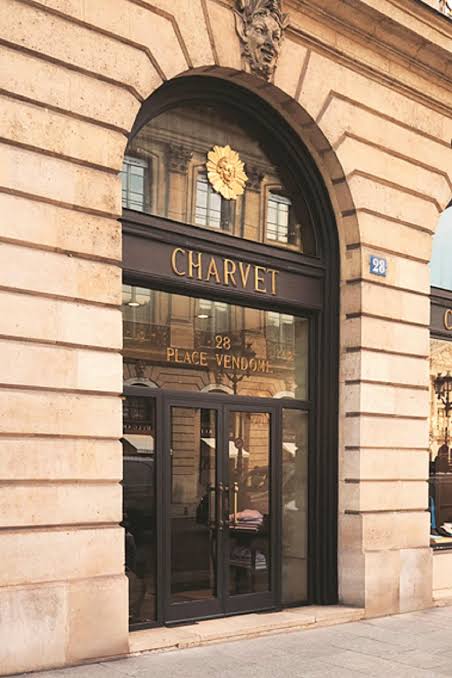
188-year-old Charvet store in Place Vendôme, Paris
Three Shirts. One Acquisition. The Chanel x Charvet Deal Decoded.
The 188-year-old shirtmaker that stopped the room.
In October 2025, Matthieu Blazy presented his debut collection for Chanel.
The pieces that generated the most conversation were not the tweed suits. Neither were they evening looks, nor jewellery.
They were three oversized cotton shirts, made in collaboration with a boutique French shirtmaker called Charvet.
Nicole Kidman wore one. A$AP Rocky wore one. Jacob Elordi wore one.
Each shirt retailed between €3,500 and €3,900.
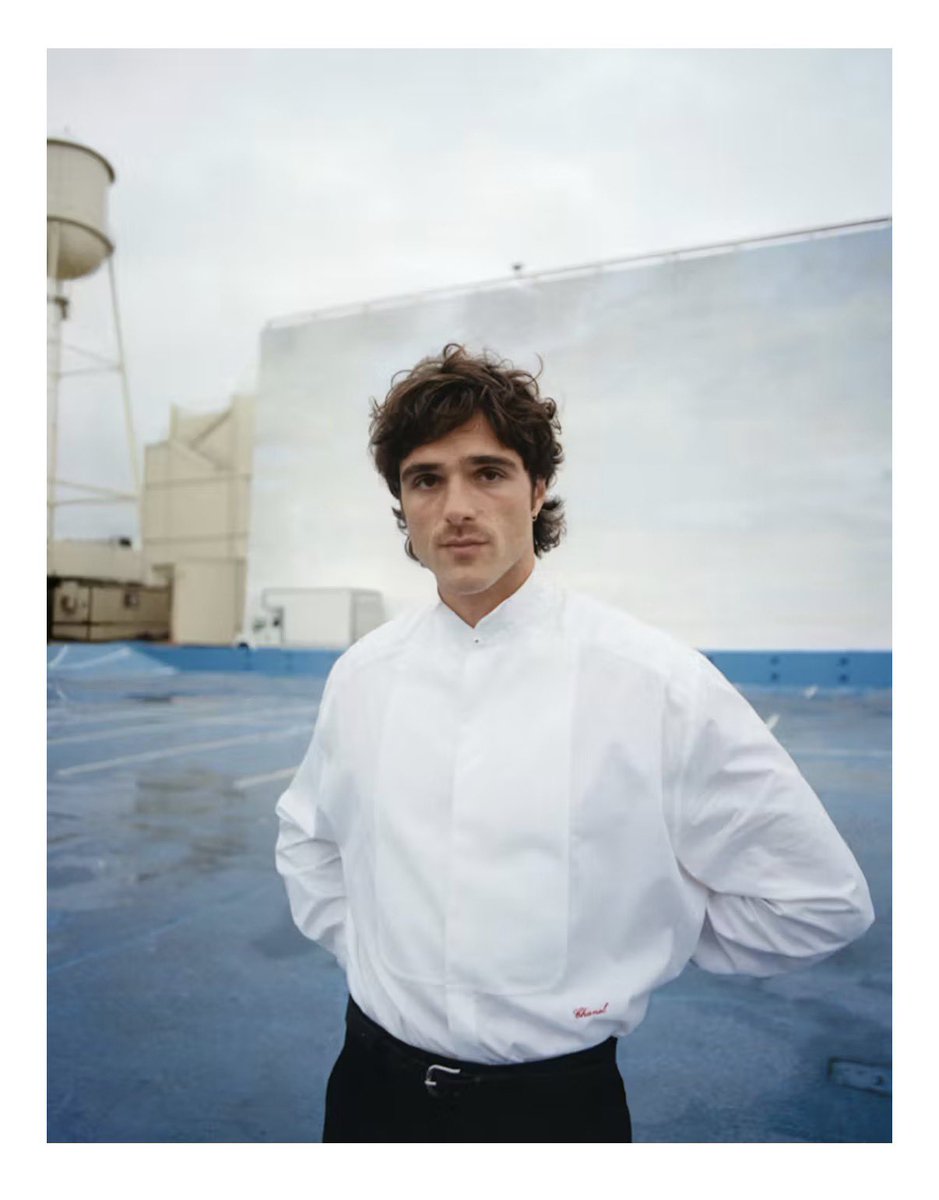
Every one sold out.
On July 2nd 2026, Chanel announced it had acquired Charvet.
Charvet is France’s oldest shirtmaker, founded in 1838, having only one store on Place Vendôme, roughly 100 employees, and €10 to €15 million in annual revenue. And… that’s about it.
The financial terms were not disclosed. Honestly speaking, they rarely are, when the asset being purchased is not a business but a philosophy.
WHAT CHANEL ACTUALLY BOUGHT
By every conventional M&A metric, there is very little here.
One store. 188 years of independent ownership. A building on Place Vendôme. A client list that has included Marcel Proust, Winston Churchill, John F. Kennedy, Yves Saint Laurent, Karl Lagerfeld, and Sofia Coppola.
Chanel essentially bought not Charvet, but Charvet’s refusal.
One hundred and eighty-eight years of refusing to advertise.
Refusing to expand or to chase a customer.
That refusal — sustained across six generations of ownership — is the most rigorous form of brand discipline in existence. And it cannot be manufactured.
It can only be acquired. So Chanel did.
THE HERMÈS PARALLEL
This acquisition does not exist in isolation.
Chanel’s broader portfolio includes full or partial stakes in sewing companies, luxury garment manufacturers, leather goods producers, and shoemakers.
Each one acquired to bring craft irreversibly inside the house.
(Source: The National, July 2026)
This is the Hermès model. Vertical integration of artisanal expertise to master irreplaceability.
Hermès owns its tanneries and trains its own saddlers. As a result, it controls every surface the brand touches.
Chanel, under Matthieu Blazy, is building the same architecture.
The announcement of the Charvet acquisition was timed deliberately ahead of Blazy’s second haute couture presentation, placing it within Chanel’s broader commitment to high-craft production.
(Source: Style Rave, July 2026)
That’s a perfectly timed communication to ensure worldwide sell-outs.
WHAT MATTHIEU BLAZY UNDERSTOOD
Three shirts changed everything.
The sheer craft at this level that sits ahead of 188 years of accumulated knowledge about how a shirt should be cut, how the collar should sit, how the fabric should move; can never be replicated by speed, by scale, or by technology.
In a market where AI is collapsing the cost of producing almost everything, the assets that only time can build are the ones commanding premiums.
Blazy understood this before the acquisition and sellout confirmed it.
Chanel acted on it nine months later. That sequence of collaboration, sellout, and acquisition, is one of the most disciplined creative-to-commercial decisions a luxury house has made in years.
THE POSITIONING VERDICT
Chanel’s president of fashion Bruno Pavlovsky described the acquisition plainly:
“We decided to get married.”
(Source: WWD, July 2026)
That language is deliberate. Marriage implies permanence. It implies shared identity.
It implies that what Charvet is will now, in some irreversible way, become part of what Chanel is.
On The Luxury Spectrum™, this decision moves Chanel’s craft credentials closer to Bespoke not through its product offering, but through its production philosophy.
The house is not becoming a shirtmaker. It is becoming the kind of institution that owns shirtmakers.
That distinction is everything and then some.
THE SLEEK WEALTH READ
Taste is now an acquirable asset. Chanel just set the market price.
And the price is not measured in dollars or euros, it is measured in years.
One hundred and eighty-eight of them, to be precise.
The brands that will define luxury in the next decade are not the ones spending on campaigns. They will be the ones spending on craft, acquiring the irreplaceable, protecting the irreplicable, and building portfolios of expertise that no competitor can replicate regardless of budget.
Chanel just made that move.
The industry is watching to understand what it means.
However, The Luxury Spectrum™ already knows.
The Blog.
Recent Posts.
The Fifty-Year Question. What the Gucci x L’Oréal Deal Really Says About Brand Control.

Why Richemont Grew 20% While Everyone Else Collapsed.

In the World of Luxury, Discounting Is a Disservice.

The Great Luxury Collapse of 2026, and Who Survived it Unfettered

The Five Types of Luxury Brands, And Why the Better Ones Never Fit Into Just One
The Fifty-Year Question. What the Gucci x L’Oréal Deal Really Says About Brand Control.
Why Richemont Grew 20% While Everyone Else Collapsed.
In the World of Luxury, Discounting Is a Disservice.
The Great Luxury Collapse of 2026, and Who Survived it Unfettered